
Beyond Code Generation: The Transformative Impact of AI in Software Development
When most people think of Artificial Intelligence’s role in software development, the first image that often springs to mind is AI writing code. Tools like GitHub Copilot have indeed made waves, demonstrating AI’s incredible ability to assist with code generation, autocompletion, and even bug fixing. However, focusing solely on this aspect is like admiring a single tree while an entire forest flourishes. The truth is, AI in software development is profoundly reshaping every single stage of the Software Development Lifecycle (SDLC).
From the initial sparks of an idea to the continuous operation and evolution of a system, AI is proving to be a game-changer. It’s not just about speeding up coding; it’s about enhancing decision-making, preempting problems, automating tedious tasks, and ultimately, delivering higher-quality software faster and more efficiently. Let’s dive deep into how AI is redefining the entire software development journey.
AI in the Early Stages: Planning, Requirements, and Design
The foundation of any successful software project lies in robust planning, clear requirements, and thoughtful design. AI is now playing a crucial role in these often human-intensive phases.
AI for Requirements Gathering & Analysis
AI-powered tools can analyze vast amounts of data – user feedback, market trends, competitor products, and existing documentation – to identify patterns, suggest features, and even pinpoint potential ambiguities or inconsistencies in requirements. Natural Language Processing (NLP) helps in understanding user stories and converting them into actionable specifications, reducing misinterpretations and improving clarity from the outset.
Predictive Project Management
Leveraging historical project data, AI algorithms can predict project timelines, resource allocation needs, and potential risks with surprising accuracy. This allows project managers to make data-driven decisions, optimize schedules, and mitigate bottlenecks before they even occur, leading to more realistic planning and fewer delays.
Automated Architecture & Design Suggestions
AI can assist architects and designers by suggesting optimal system architectures, recommending design patterns, and even identifying potential scalability or security weaknesses based on requirements and best practices. This accelerates the design phase and ensures that solutions are robust and future-proof.
AI During Development: Coding, Testing, and Debugging
This is where AI’s impact is perhaps most visible, extending far beyond simple code completion.
Advanced Code Generation & Autocompletion
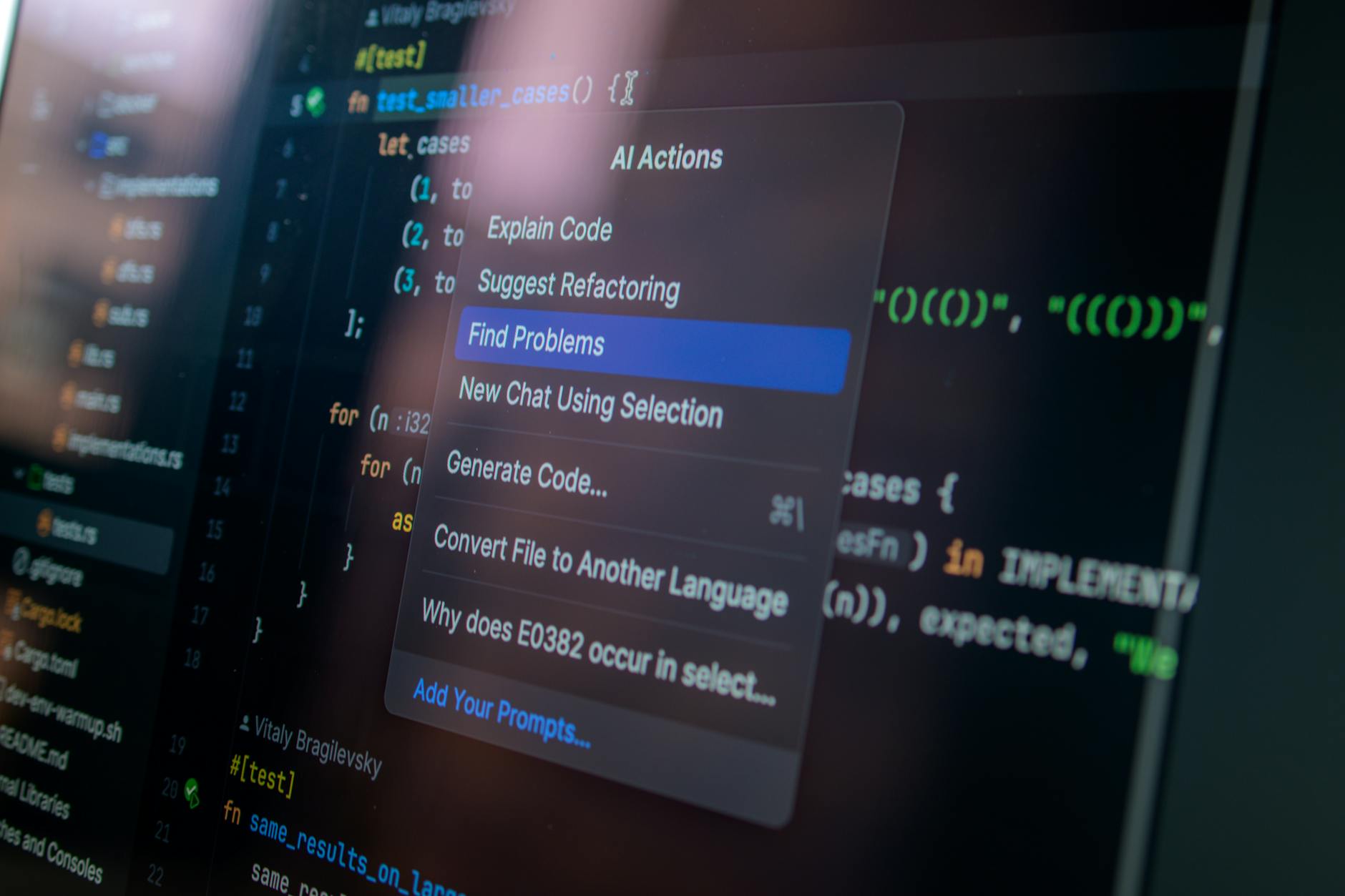
Beyond basic suggestions, AI can generate entire functions, classes, or even components based on natural language prompts or existing code context. This significantly boosts developer productivity, reduces repetitive coding, and allows engineers to focus on more complex, creative problem-solving.
AI-Powered Testing & Quality Assurance
AI is transforming testing by automating test case generation, identifying critical test paths, and even predicting which parts of the code are most likely to fail based on changes. AI-driven testing tools can autonomously explore user interfaces, detect anomalies, and prioritize tests, ensuring comprehensive coverage and faster feedback cycles.
Intelligent Debugging & Error Resolution
Debugging, a notoriously time-consuming process, is getting an AI overhaul. AI can analyze error logs, stack traces, and code changes to pinpoint the root cause of bugs more quickly. Some systems can even suggest potential fixes or refactoring strategies, significantly reducing the mean time to repair (MTTR) and improving software reliability.
AI in Deployment & Operations: DevOps, Monitoring, and Maintenance
AI is extending its reach into the post-development phases, making deployments smoother and systems more resilient.
AIOps for Proactive Monitoring & Incident Response
AIOps platforms use machine learning to analyze vast streams of operational data – logs, metrics, events – to detect anomalies, predict outages, and even automate incident response. This shifts operations from reactive firefighting to proactive management, ensuring higher availability and performance of applications.
Automated Deployment & Release Management
While CI/CD pipelines automate much of this, AI can further optimize release strategies, predict the impact of deployments, and even roll back changes autonomously if issues are detected, minimizing downtime and risk.
Predictive Maintenance & Self-Healing Systems
AI can predict when hardware or software components are likely to fail, enabling proactive maintenance. Furthermore, in some advanced systems, AI can initiate self-healing mechanisms, automatically resolving minor issues or reconfiguring resources to maintain system integrity without human intervention.
The Human Element: AI as an Enabler, Not a Replacement
It’s crucial to understand that AI in software development isn’t about replacing human developers but augmenting their capabilities. AI handles the mundane, repetitive, and data-intensive tasks, freeing developers to focus on innovation, complex problem-solving, architectural design, and creative thinking. It fosters a collaborative environment where humans and machines work together to achieve unprecedented levels of efficiency and quality.
However, this shift necessitates new skills for developers, including prompt engineering, understanding AI outputs, and focusing on higher-level problem-solving. Ethical considerations, such as bias in AI-generated code or fairness in AI-driven decisions, also become paramount.
Conclusion
The journey of AI in software development is truly remarkable, extending far beyond the initial fascination with code generation. From the drawing board to continuous operation, AI is permeating every aspect of the SDLC, driving efficiency, improving quality, and accelerating innovation. As AI technologies continue to evolve, the software development landscape will undoubtedly transform further, empowering teams to build more sophisticated, reliable, and impactful solutions than ever before. The future of software development isn’t just assisted by AI; it’s intricately woven with it.
Frequently Asked Questions About AI in Software Development
What is the primary benefit of using AI in the software development lifecycle?
The primary benefit is a significant increase in efficiency, quality, and speed across all stages of the SDLC. AI automates repetitive tasks, enhances decision-making through data analysis, predicts issues, and helps deliver higher-quality software faster and with fewer resources.
Will AI replace human software developers?
No, AI is not expected to replace human software developers. Instead, it acts as a powerful assistant, augmenting developers’ capabilities by handling mundane and complex analytical tasks. This allows developers to focus on higher-level problem-solving, creativity, innovation, and strategic design, evolving their roles rather than eliminating them.
What are some ethical considerations for using AI in software development?
Ethical considerations include ensuring fairness and mitigating bias in AI-generated code or AI-driven decisions, maintaining data privacy, understanding the accountability for AI-generated errors, and addressing the need for transparency in AI models. Developers must also consider the environmental impact of AI computation.