
Beyond Code: How AI is Revolutionizing the Entire Software Development Lifecycle (SDLC)
The world of software development is in constant flux, driven by relentless innovation. For decades, the Software Development Lifecycle (SDLC) has been a structured roadmap for creating high-quality software. But what happens when the very fabric of that roadmap is reimagined by artificial intelligence? We’re moving beyond simple code generation; AI in software development is now a profound force reshaping every phase, making the process faster, smarter, and more efficient.
From initial ideation to ongoing maintenance, AI isn’t just a tool; it’s becoming an integral partner, augmenting human capabilities and unlocking new possibilities previously deemed impossible. Let’s delve into how AI is systematically revolutionizing the entire SDLC.
The Dawn of AI-Driven Requirements & Planning
The foundation of any successful software project lies in clear requirements and meticulous planning. AI is now stepping in to enhance this crucial initial stage.
Predictive Analytics for Project Scope
AI algorithms can analyze vast datasets of past projects, identifying patterns, potential risks, and resource requirements. This allows for more accurate project scoping, realistic timeline estimations, and better budget allocation, reducing the chances of scope creep and unexpected delays.
Intelligent Requirement Elicitation
Natural Language Processing (NLP) powered AI can help analyze stakeholder input, identify ambiguities, resolve conflicts in requirements, and even suggest missing features based on industry best practices and similar successful projects. This ensures a clearer, more consistent understanding of what needs to be built.
AI-Powered Software Design & Architecture
Once requirements are solidified, the design phase translates them into a blueprint. AI is providing innovative ways to optimize this process.
Automated Design Pattern Suggestion
AI tools can analyze requirements and existing codebases to suggest optimal architectural patterns, data structures, and component designs. This accelerates the design process and promotes the adoption of proven, scalable solutions.
Architecture Validation with AI
AI can review proposed architectures against non-functional requirements like scalability, security, and performance. It can simulate various loads and scenarios to predict potential bottlenecks or vulnerabilities before a single line of production code is written.
Intelligent Development: Coding, Debugging, & Refactoring
This is perhaps where AI’s impact is most visible and widely discussed. AI is transforming the very act of writing and managing code.
AI-Assisted Code Generation (Co-pilots)
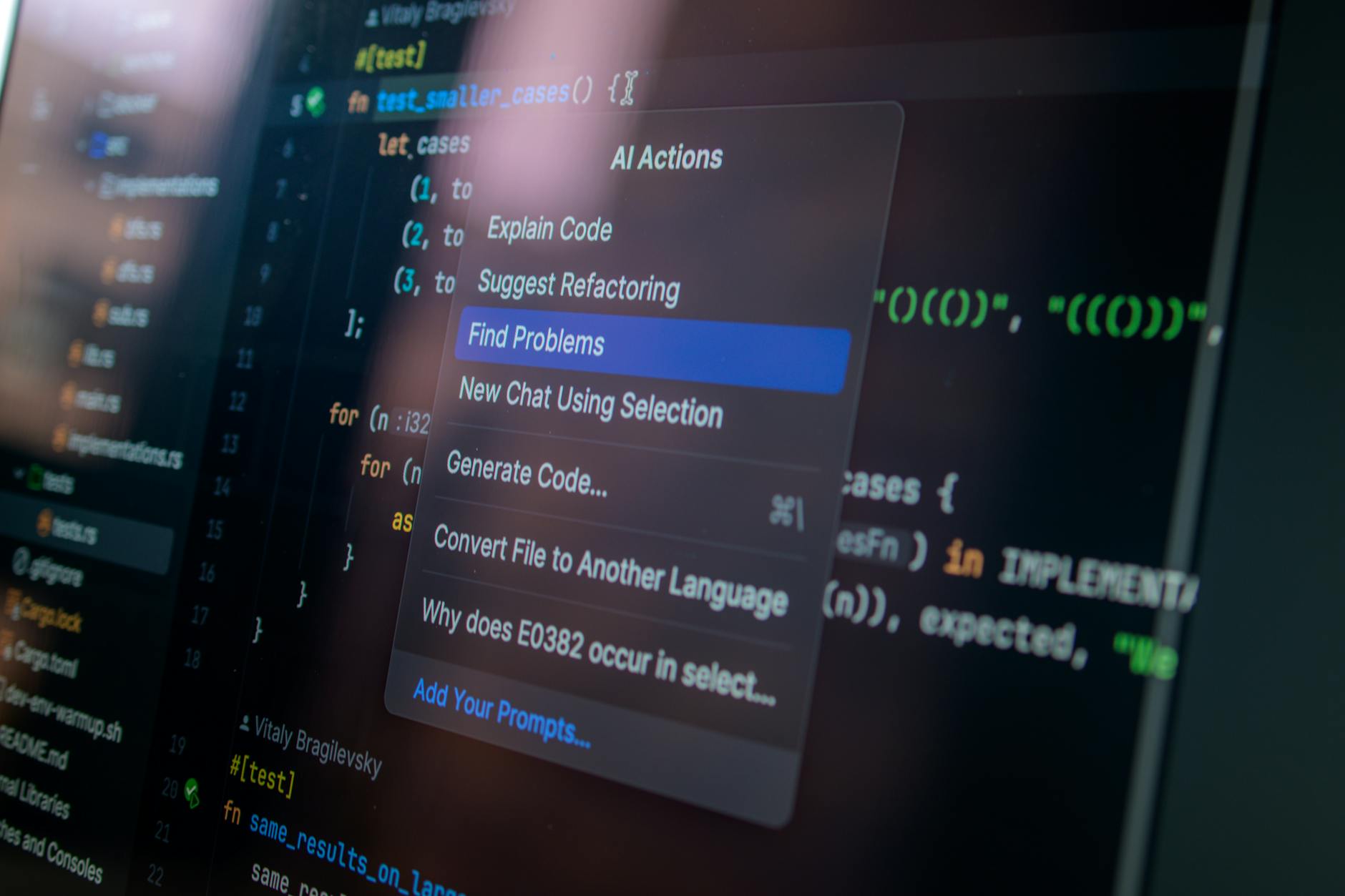
Tools like GitHub Copilot leverage large language models to suggest lines of code, complete functions, and even generate entire blocks based on comments or surrounding code. This significantly boosts developer productivity, reduces boilerplate, and helps bridge knowledge gaps.
Smart Debugging & Error Resolution
AI can analyze error logs, stack traces, and code changes to pinpoint the root cause of bugs far more quickly than traditional methods. It can even suggest potential fixes, learning from past debugging efforts and common programming errors.
Automated Code Refactoring & Optimization
AI tools can identify inefficient code, redundant sections, or areas that don’t adhere to best practices. They can then suggest or even automatically perform refactoring to improve code readability, maintainability, and performance without altering external behavior.
Next-Gen Testing & Quality Assurance with AI
Ensuring software quality is paramount, and AI is revolutionizing how we test applications.
AI-Driven Test Case Generation
AI can analyze application code, requirements, and user behavior patterns to automatically generate comprehensive test cases, including edge cases often missed by human testers. This ensures broader test coverage and quicker identification of defects.
Predictive Bug Detection
Machine learning models can analyze code commits, test results, and development metrics to predict which parts of the codebase are most likely to contain defects, allowing testers to prioritize their efforts more effectively.
Autonomous UI/UX Testing
AI-powered bots can navigate user interfaces, perform interactions, and validate visual elements, ensuring a consistent and optimal user experience across different devices and browsers. They can even learn from user interaction data to focus on critical paths.
Streamlining Deployment & Operations (AIOps)
The transition from development to production and ongoing system management is crucial for reliability. AI is enhancing the DevOps pipeline, giving rise to AIOps.
Intelligent Release Management
AI can analyze the readiness of new releases, predict potential deployment issues based on past data, and even orchestrate rollouts and rollbacks autonomously to minimize downtime and risk.
Proactive Anomaly Detection & Incident Management
AIOps platforms continuously monitor systems, identify abnormal behavior (anomalies), and predict potential failures before they impact users. They can even trigger automated responses or suggest solutions to incident response teams, drastically reducing Mean Time To Resolution (MTTR).
Evolving Maintenance & Support with AI
The SDLC doesn’t end at deployment; ongoing maintenance and support are vital for long-term software success. AI is making these stages more efficient and user-centric.
Predictive Maintenance
AI can monitor application performance, resource utilization, and user feedback to anticipate future issues, plan updates, and proactively address potential problems before they escalate into major incidents.
Automated Customer Support & Feedback Analysis
AI-powered chatbots and virtual assistants can handle routine customer inquiries, triage support tickets, and provide instant solutions. Furthermore, AI can analyze vast amounts of user feedback to identify common pain points, feature requests, and areas for improvement, directly informing future development cycles.
Conclusion: An Augmented Future
The integration of AI into the SDLC is not about replacing human developers but augmenting their capabilities, freeing them from repetitive tasks, and empowering them to focus on complex problem-solving and innovation. AI acts as a co-pilot at every stage, enhancing efficiency, improving quality, and accelerating the pace of software delivery.
As AI technologies continue to mature, we can expect even deeper integration, leading to truly self-optimizing and self-healing software systems. The future of software development is not just about writing code; it’s about intelligently designing, building, and maintaining the digital infrastructure of tomorrow, hand-in-hand with AI.
Frequently Asked Questions About AI in SDLC
How does AI specifically help with coding?
AI assists with coding primarily through intelligent code completion, suggestion of entire code blocks or functions based on context, automated code generation from specifications, and real-time error detection and suggestion of fixes. This significantly speeds up development and reduces human error.
Is AI replacing human developers?
No, AI is not replacing human developers. Instead, it’s augmenting their capabilities. AI handles repetitive, mundane tasks, allowing developers to focus on higher-level design, complex problem-solving, creativity, and strategic decision-making. AI tools act as powerful co-pilots, making developers more efficient and productive.
What are the main challenges of integrating AI into SDLC?
Key challenges include ensuring data privacy and security when feeding code and project information to AI tools, managing the cost and complexity of AI infrastructure, integrating AI seamlessly with existing developer workflows and tools, overcoming potential biases in AI-generated suggestions, and training developers to effectively use and trust AI-powered assistants.