
Beyond Co-Pilot: How AI in software development is Reshaping the Entire Software Development Lifecycle
The rise of AI tools like GitHub Co-Pilot has shown us a glimpse of the future of software development. But what if we told you that AI’s influence extends far beyond mere code suggestions? From concept to deployment and beyond, AI is fundamentally transforming every stage of the Software Development Lifecycle (SDLC), promising unprecedented levels of efficiency, quality, and innovation. This isn’t just about boosting productivity; it’s about reimagining how we build software entirely.
The Dawn of AI-Augmented Development
While tools like Co-Pilot have revolutionized the coding phase, offering intelligent auto-completion and snippet generation, they represent just the tip of the iceberg. The true power of AI lies in its ability to augment human capabilities across the entire SDLC, moving from simple assistance to deep, intelligent collaboration and automation. We’re witnessing a paradigm shift where AI doesn’t just help developers write code, but helps teams think about, design, build, test, and maintain software more effectively than ever before.
AI Across the SDLC: A Deep Dive
Requirements Gathering and Planning
AI can analyze vast quantities of documentation, user stories, and historical project data to identify patterns, detect ambiguities, and even predict potential project risks or scope creep. Natural Language Processing (NLP) helps extract critical requirements from unstructured text, ensuring clarity and completeness from the outset. AI can also assist in effort estimation, providing more accurate projections based on past project metrics.
Design and Architecture
AI tools are emerging that can suggest optimal architectural patterns based on functional and non-functional requirements. They can analyze existing codebases for design flaws, recommend refactoring opportunities, and even generate preliminary design diagrams or component interactions. This ensures robust, scalable, and maintainable systems from the ground up.
Coding and Implementation (Beyond Co-Pilot)
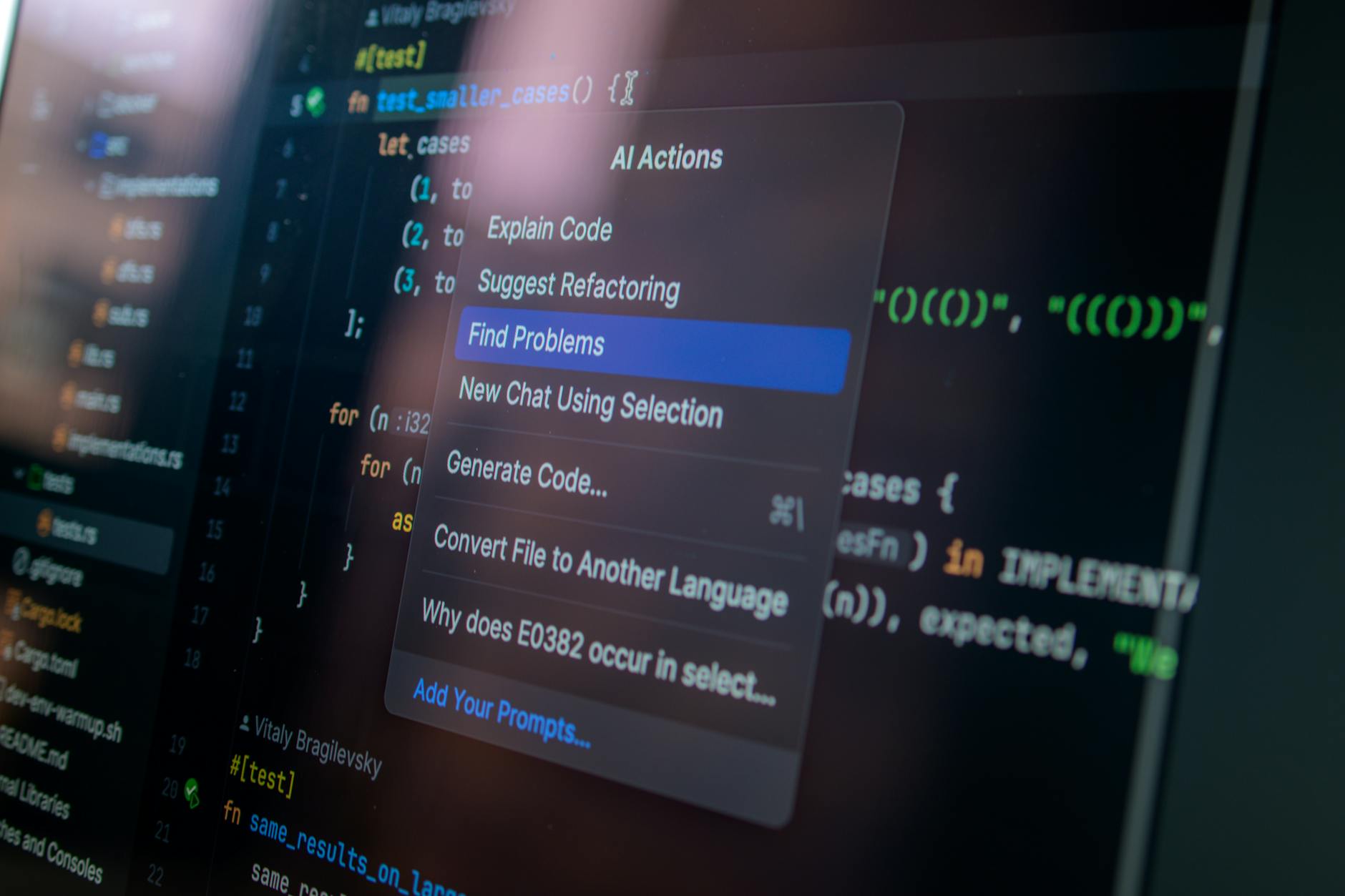
Beyond intelligent code completion, AI is now capable of generating entire blocks of code, translating pseudo-code into functional applications, and even automating routine refactoring tasks. AI-powered static analysis tools are becoming more sophisticated, catching subtle bugs and security vulnerabilities that human reviewers might miss, and suggesting highly optimized solutions. It’s about AI as a proactive coding partner, not just a suggestion engine.
Testing and Quality Assurance
This is a game-changer. AI can generate comprehensive test cases, predict where bugs are most likely to occur, and even automatically fix certain types of defects. Machine learning models analyze user behavior and code changes to prioritize testing efforts, creating more efficient and effective QA cycles. AI-driven visual testing ensures UI consistency, while performance testing tools use AI to simulate realistic load conditions.
Deployment and Operations (DevOps)
AI is streamlining CI/CD pipelines, optimizing build processes, and automating release management. In operations, AI-powered observability platforms detect anomalies, predict system failures before they occur, and even suggest automated remediation steps. This leads to more stable systems, faster recovery times, and reduced manual intervention.
Maintenance and Evolution
Maintaining legacy systems is a perpetual challenge. AI can analyze old codebases, identify dead code, automate documentation generation, and even suggest paths for modernization or migration. It helps teams understand complex systems more quickly, reducing the burden of technical debt and facilitating continuous improvement.
Benefits of an AI-Powered SDLC
- Increased Efficiency and Speed: Automating repetitive tasks, accelerating code generation, and streamlining testing phases significantly reduces development time.
- Enhanced Quality and Reliability: AI’s ability to identify subtle bugs, optimize designs, and predict issues leads to higher quality software with fewer defects.
- Reduced Costs: Automation across the SDLC minimizes manual effort, resource allocation, and the expense of rectifying post-release bugs.
- Innovation Acceleration: Developers are freed from mundane tasks to focus on complex problem-solving, creativity, and strategic innovation.
- Empowered Developers: AI acts as a force multiplier, enabling developers to produce more, higher-quality work and master new technologies faster.
Challenges and Ethical Considerations
While the benefits are immense, integrating AI into the SDLC isn’t without its hurdles. Concerns about data privacy, algorithmic bias (if training data is flawed), and the potential for over-reliance on AI are critical. The need for new skill sets, ethical guidelines, and robust oversight frameworks will be paramount to harness AI’s power responsibly.
The Future is Now: Embracing AI in Software Development
The era of AI-augmented software development is not a distant future; it’s rapidly unfolding. From streamlining initial planning to sophisticated maintenance, AI is proving to be an indispensable partner at every stage of the SDLC. Organizations that proactively embrace and strategically integrate AI tools will gain a significant competitive edge, building better software, faster, and more reliably. The question is no longer if AI will reshape software development, but how deeply your organization will choose to engage with this transformative technology.
Frequently Asked Questions (FAQ)
Q1: Is AI going to replace software developers?
A1: No, not in the foreseeable future. AI is an augmentation tool, designed to enhance developer productivity, automate mundane tasks, and identify complex patterns. It frees developers to focus on higher-level problem-solving, creativity, and strategic decision-making, shifting roles rather than eliminating them.
Q2: How can organizations start integrating AI into their SDLC?
A2: Start small with specific pain points, like automated testing, intelligent code reviews, or requirements analysis. Pilot AI tools in specific projects, invest in training for your teams, and build an understanding of where AI can deliver the most impact before scaling up.
Q3: What are the biggest risks of relying heavily on AI in software development?
A3: Key risks include algorithmic bias (leading to unfair or flawed outcomes), over-reliance without human oversight (potentially introducing subtle errors or security vulnerabilities), data privacy concerns, and the challenge of managing the complexity of AI-generated code or systems. A balanced approach with strong human validation is crucial.