
Introduction: Ever Wondered Why Some Brands Dominate Google’s AI Overviews?
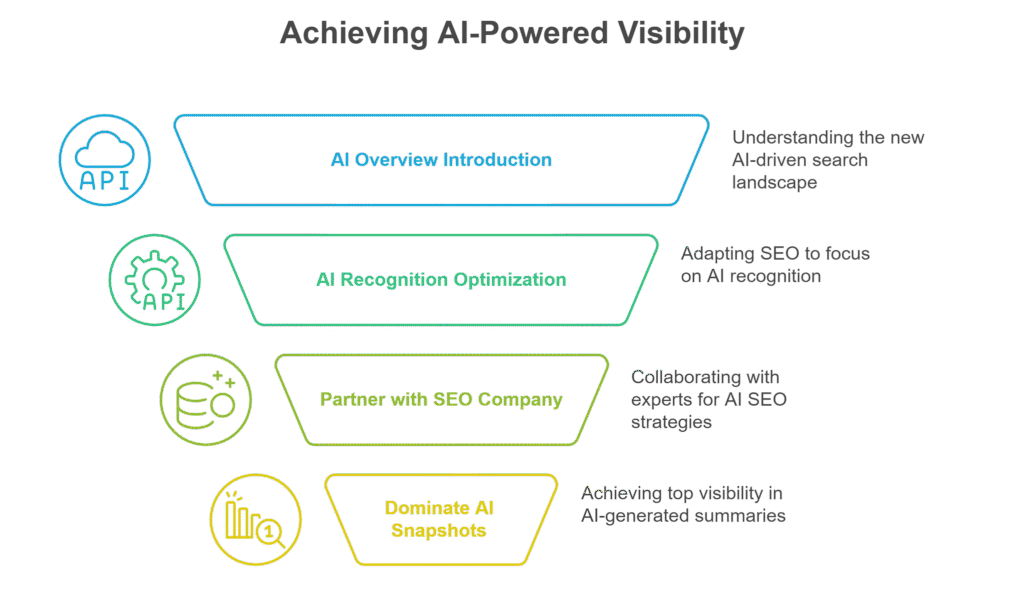
If you’ve recently searched something on Google and noticed a detailed, AI-generated snapshot summarizing the best results at the top—welcome to the new SEO battlefield: Google’s AI Overview.
This isn’t just another feature update. AI Overview is changing how search results are displayed, prioritized, and consumed. It’s not just about traditional SEO anymore—it’s about AI-powered visibility.
So, how do businesses stay ahead in this AI-first search world?
By partnering with the best SEO company in Delhi, brands can optimize not just for rankings, but for AI recognition. In this article, we’ll uncover how the right SEO partner can help you dominate these new AI snapshots and secure a winning edge in search.
Understanding Google’s AI Overview and Its Impact
Before we dive into strategies, let’s simplify what Google’s AI Overview actually is.
What Is Google AI Overview?
Google’s AI Overview (formerly known as Search Generative Experience or SGE) is Google’s way of answering complex queries using generative AI. Instead of just listing websites, it gives a summarized snapshot that pulls data from multiple top-ranking pages.
Think of it as position zero on steroids—if you’re in this box, you own the conversation.
Why It Matters More Than Ever
- Users rely on it first before scrolling down.
- Click-through rates (CTR) are highest for AI Overview content.
- It rewards credible, well-structured, and helpful content.
That’s why SEO managers and digital strategists are racing to crack the code—and why the best SEO companies in Delhi are already mastering it.
How the Best SEO Company in Delhi Crafts AI-Ready Content
Getting your content featured in AI Overview isn’t just luck. It’s strategy, data, and smart execution.
Here’s what top Delhi SEO agencies do differently:
1. Topic Clustering Around Search Intent
The best SEO experts don’t just target keywords. They build clusters of content around user intent.
For example:
- Primary Topic: “Best laptops for graphic design”
- Clustered Content: “Top laptops under 1 lakh,” “MacBook vs Dell for creatives,” “Must-have laptop features for designers”
By linking related content and answering multiple user questions in one space, your website becomes an authority, increasing your chances of being summarized in AI Overview.
2. Schema Markup and Structured Data
Google’s AI prefers sites that are easy to read—both for humans and bots.
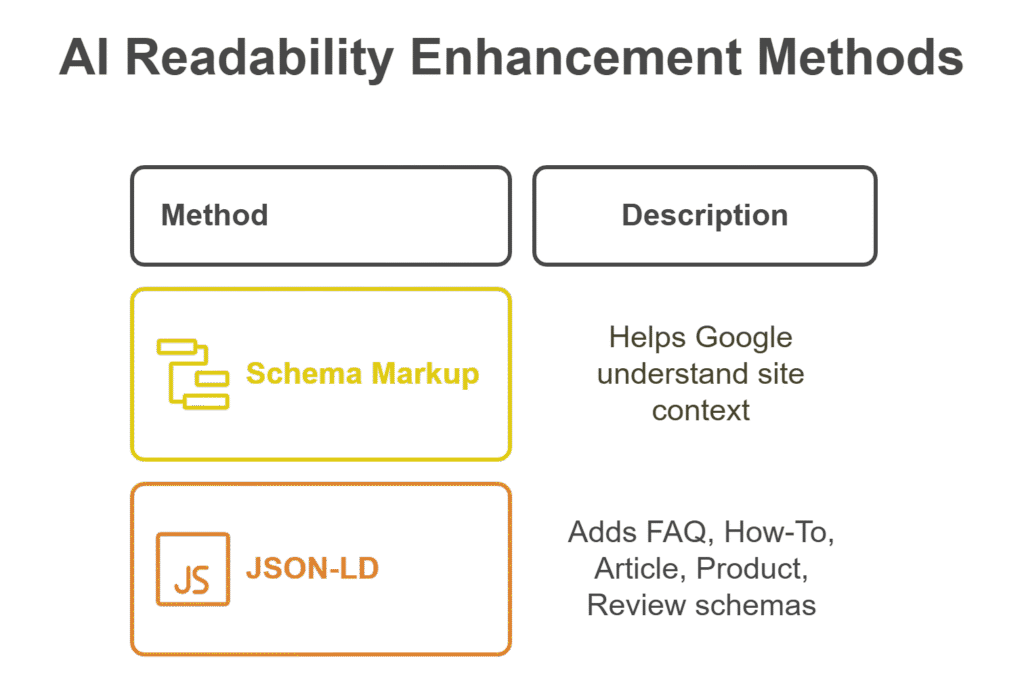
- Schema markup helps Google understand your site contextually.
- The best SEO companies in Delhi use tools like JSON-LD to add FAQ, How-To, Article, Product, and Review schemas to content.
This structured layer enhances eligibility for AI Overview extraction.
3. Optimizing for E-E-A-T (Experience, Expertise, Authority, Trust)
Google has confirmed that E-E-A-T signals are essential in AI content summaries.
SEO agencies that specialize in AI strategies:
- Showcase author bios with credentials.
- Add original images, case studies, and experience-driven content.
- Build authoritative backlinks from trusted domains.
Tip: Link your author profiles to platforms like LinkedIn or Medium to establish credibility.
On-Page AI Optimization: How Delhi’s Top SEOs Do It
Many SEO companies optimize pages for search engines. But the best ones in Delhi optimize pages for search engines + AI interpretation.
Here’s how:
1. Use AI-Understandable Language
Google’s AI needs clarity. Instead of writing jargon-heavy or overly creative content, it prefers:
- Concise sentences
- Simple, direct answers
- Bullet points for clarity
Example:
Don’t write: “Leveraging diverse paradigms of algorithmic workflows…”
Do write: “Use clear headings, short paragraphs, and direct answers to common user questions.”
2. Answer Multiple Questions in One Page
Want to win AI Overview? Become the ultimate answer source.
SEO pros in Delhi create comprehensive guides that answer all potential follow-up questions.
This is often done using:
- Table of contents
- Jump links
- FAQs sections (like at the end of this article!)
3. Fast, Mobile-Friendly, and Core Web Vitals-Approved
If your site isn’t:
- Loading in under 3 seconds
- Optimized for mobile
- Passing Core Web Vitals
…Google’s AI might just skip it. The best SEO companies fix all these before even publishing your content.
Use tools like:
Real-World Case Study: How Bit Binders Nailed an AI Overview Spot
Let’s make this real.
Client: Mid-sized SaaS company in Delhi NCR
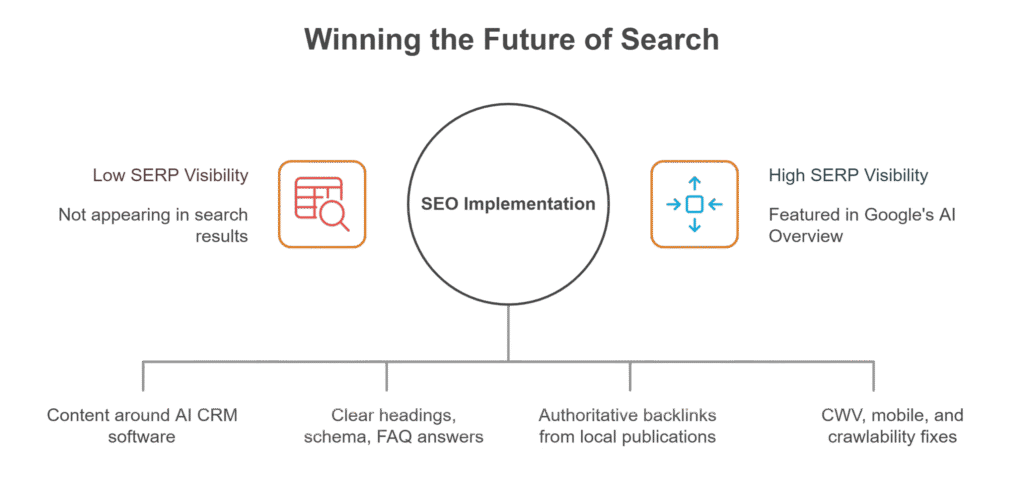
Challenge: Not appearing in SERPs for competitive B2B keywords
SEO Partner: Bit Binders
Strategy Used:
- Built a topic cluster around “AI-powered CRM software”
- Structured content with clear headings, schema markup, and FAQ-rich answers
- Integrated authoritative backlinks from local publications
- Improved technical SEO: CWV, mobile performance, and crawlability
Result:
Featured in Google’s AI Overview for “What is AI CRM software?”
132% increase in organic traffic
68% higher conversion from organic leads in 60 days
This proves that the right SEO company in Delhi doesn’t just boost traffic—it helps you win the future of search.
AI SEO Is Not a One-Time Fix. It’s a Long-Term Investment.
The biggest mistake brands make?
They think AI Overview is a one-time goal. But Google constantly updates its models and results. What works today might not tomorrow.
The best SEO companies offer:
- Content refresh cycles
- Monthly technical audits
- AI-trend adaptation based on updates
If your SEO partner isn’t doing this, you’re at risk of losing your AI visibility.
Final Thoughts: Ready to Own the AI Spotlight?
Winning Google’s AI Overview isn’t about outsmarting the algorithm. It’s about understanding it, adapting to it, and consistently delivering value.
When you work with the best SEO company in Delhi, you don’t just chase rankings—you build lasting visibility that evolves with Google.
FAQs on Google AI Overview and SEO
Q1. What is the difference between traditional SEO and AI SEO?
Traditional SEO focuses on ranking for search queries. AI SEO involves structuring content to be understood and favored by AI models for summaries, voice search, and smart displays.
Q2. How long does it take to appear in Google’s AI Overview?
With the right strategy, results can start showing in 2–3 months, depending on competition and content quality.
Q3. Do small businesses stand a chance with AI Overview?
Absolutely. Google AI rewards clarity and usefulness over size. A focused content strategy can beat big brands.
Q4. Does paid advertising help with AI Overview rankings?
No. AI Overview is organic. It depends on quality content, structured data, and trust signals—not ad spend.
Q5. Can Bit Binders help with AI SEO even if my site is new?
Yes!
offers foundational SEO + AI-first content strategies designed even for startups or new domains.
Useful Links
Internal Links:
External Links:
Ready to Rank Higher with AI-Optimized SEO?
Whether you’re a startup or an enterprise, AI Overview is your new SEO battleground—and you don’t have to fight alone.
Let Bit Binders help you create content that AI loves.
Book a free SEO consultation today and take the first step to owning the top of Google.