
The AI Architect: Revolutionizing AI Software Development with Generative AI
The landscape of custom software development is undergoing a seismic shift, powered by the incredible capabilities of generative artificial intelligence. Once confined to the realms of science fiction, the idea of machines creating complex code and intricate designs is now a tangible reality. Generative AI isn’t just a tool; it’s an ‘AI Architect,’ reshaping how we conceive, design, build, and deploy custom software solutions. This revolution promises unprecedented efficiency, innovation, and personalization, fundamentally altering the future of AI software development.
What is Generative AI in Software Development?
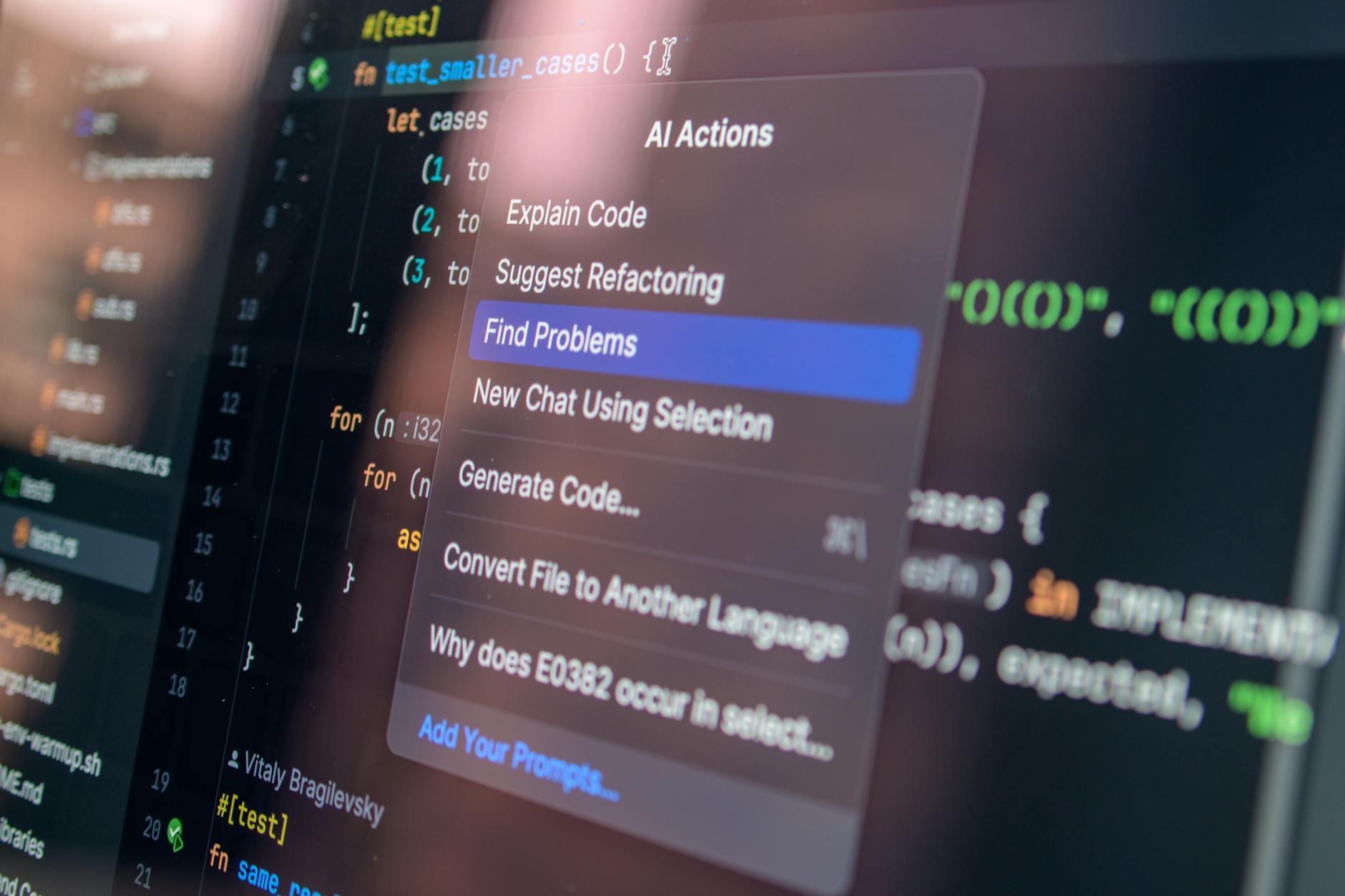
Generative AI refers to AI models capable of producing novel content, whether it’s text, images, audio, or in our context, code and software architecture. Unlike traditional AI that analyzes or predicts based on existing data, generative AI *creates*. In software development, this translates to systems that can write code snippets, generate UI designs, propose database schemas, automate test cases, and even suggest entire architectural patterns from high-level prompts. It moves beyond simple automation to genuine creation, acting as an intelligent co-pilot for developers and architects alike.
Key Ways Generative AI is Transforming Custom Software Development
Code Generation & Automation
One of the most immediate impacts of generative AI is its ability to write code. From simple functions to complex algorithms, AI can translate natural language descriptions or design specifications into executable code. This significantly reduces manual coding effort, accelerates development cycles, and allows human developers to focus on higher-level problem-solving, architectural decisions, and innovation rather than repetitive coding tasks. It’s not just about speed; it’s about consistency and reducing human error.
Intelligent Prototyping & Design
Generative AI excels at rapid prototyping. Developers can input abstract ideas or user requirements, and the AI can generate multiple UI/UX design variations, wireframes, and even functional prototypes almost instantly. This iterative capability speeds up the design phase, allows for extensive experimentation, and helps pinpoint optimal user experiences far more quickly than traditional manual methods. It transforms the abstract into tangible designs in minutes.
Automated Testing & Debugging
Debugging and testing are often the most time-consuming phases of software development. Generative AI can automatically create comprehensive test cases based on code logic and requirements, identify potential vulnerabilities, and even suggest fixes. By simulating various scenarios and predicting potential failure points, AI ensures higher code quality and robustness, drastically cutting down the time and resources spent on quality assurance.
Accelerated Iteration & Deployment
The combination of AI-driven code generation, intelligent prototyping, and automated testing naturally leads to faster iteration cycles. Changes can be implemented, tested, and deployed at unprecedented speeds. This agility is crucial for custom software development, where requirements often evolve. Generative AI facilitates continuous integration and continuous deployment (CI/CD) pipelines, making them more efficient and responsive.
Personalized User Experiences
For custom software, personalization is key. Generative AI can analyze user behavior patterns and preferences to dynamically adapt interfaces, suggest features, or even create unique content tailored to individual users. This leads to highly engaging and relevant software experiences, a significant differentiator in competitive markets.
Challenges and Considerations
While the benefits are immense, integrating generative AI into custom software development isn’t without its challenges. Ensuring the accuracy and security of AI-generated code, managing intellectual property rights, and training developers to effectively collaborate with AI tools are critical considerations. The ‘human in the loop’ remains essential for oversight, ethical decision-making, and addressing edge cases that AI may miss.
The Future of the AI Architect
The ‘AI Architect’ is not meant to replace human architects or developers but to augment their capabilities, freeing them from mundane tasks and empowering them to achieve greater innovation. The future of custom software development will likely see a symbiotic relationship where humans define the vision and strategic direction, while generative AI handles the intricate details and accelerates execution. This partnership will usher in an era of more complex, robust, and user-centric software solutions developed at an unparalleled pace.
Conclusion:
Generative AI stands as a monumental force, poised to redefine custom software development. By automating code generation, enhancing design, streamlining testing, and accelerating deployment, it offers a pathway to unprecedented efficiency and innovation. Embracing the ‘AI Architect’ means stepping into a future where software development is faster, smarter, and more capable than ever before, ultimately delivering superior tailor-made solutions for businesses worldwide.
Frequently Asked Questions
Q1: How does generative AI speed up custom software development?
A1: Generative AI accelerates development by automating repetitive coding tasks, generating initial prototypes and UI designs rapidly, and creating comprehensive test cases, significantly reducing the manual effort and time required at each stage of the software lifecycle.
Q2: What are the main challenges when adopting generative AI for software projects?
A2: Key challenges include ensuring the accuracy, reliability, and security of AI-generated code, managing data privacy and intellectual property concerns, and successfully integrating AI tools into existing workflows while upskilling development teams to work effectively with AI.
Q3: Will generative AI replace human software developers?
A3: Rather than replacement, generative AI is more likely to augment human developers. It will handle routine, repetitive tasks, allowing developers to focus on higher-level problem-solving, complex architectural decisions, creativity, and strategic innovation, evolving their roles into ‘AI Architects’ or ‘AI-augmented developers.’